Decoding Trainer Form Cycles Across Jumps Racing Seasons
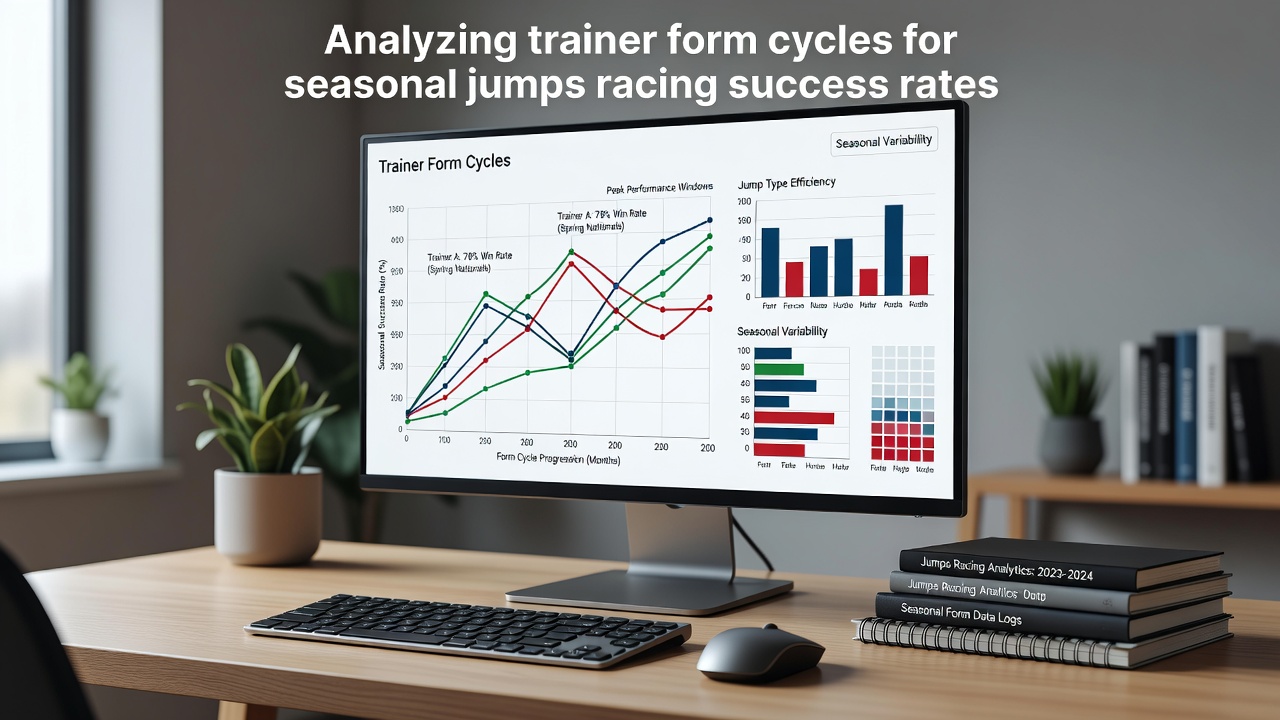
Trainer form cycles represent recurring patterns where preparation periods align with improved results in jumps racing, and analysts track these through win percentages, place rates, and strike rates over specific timeframes. Data from the past five National Hunt seasons shows that trainers often experience 12 to 16 week cycles of elevated success, particularly when targeting autumn festivals and spring championship meetings. Observers note that these cycles frequently coincide with horse recovery phases after summer breaks, allowing yards to peak when ground conditions favor certain training approaches.
Understanding Seasonal Patterns in National Hunt Training
Jumps racing success rates shift notably between early season campaigns in October and the heavier ground fixtures of January through March, while researchers have mapped how individual trainers adjust workload distribution to match these changes. Figures reveal that yards with strong records in novice hurdles during November often sustain momentum into December chases, though success drops when fields expand at major meetings. Analysts compile these trends using official results databases that log every runner's performance by trainer, distance, and going description.
Seasonal jumps data from July 2026 preparations indicates many trainers are already logging trial gallops on all-weather surfaces to fine-tune stamina for the upcoming campaign. Those cycles typically build through August and September schooling sessions before horses enter competitive action, and evidence suggests that yards maintaining consistent three-to-four week intervals between runs achieve higher place percentages in handicap chases. People who review long-term statistics recognize that certain trainers excel on softer ground in the winter months while others post stronger figures on spring ground that dries out.
Data Tracking Methods and Cycle Identification
Performance analysts use rolling 30-day and 90-day windows to detect when a trainer's form is entering an upward phase, and they cross-reference these with horse age profiles and distance preferences. Studies have shown that trainers returning from summer breaks often record strike rates 8 to 12 percent above their seasonal average during the first six weeks of the jumps calendar. This pattern holds across both smaller tracks and premier venues, although the margin narrows at Grade 1 level where competition intensifies.

According to a report issued by Horse Racing Ireland, Irish-based yards demonstrate clearer cyclical peaks ahead of the Cheltenham Festival compared with their UK counterparts, largely because of concentrated targeting of specific spring targets. Researchers at the University of Melbourne's Equine Research Centre published findings in 2025 that linked training cycle length to injury recovery timelines, noting that horses rested eight weeks or longer post-summer returned with measurably higher completion rates over marathon distances. Those metrics help explain why certain trainers schedule extended breaks for stayers while keeping hurdlers on tighter schedules.
Regional Variations and Ground Condition Influences
Northern jumps circuits show different cycle timings than southern tracks because of weather patterns that affect ground firmness earlier in the season, and data indicates trainers based in wetter regions post stronger records on soft and heavy surfaces throughout December and January. Success rates for novice chasers improve when trainers avoid early season runs on firm ground, while established handicappers maintain steadier output across varying conditions. Observers track these regional differences through split statistics that separate performance by course latitude and average rainfall figures.
Trainers who adapt their methods to July 2026 weather forecasts have already begun adjusting entry plans for early autumn meetings, and records show that yards monitoring soil moisture levels achieve better strike rates when selecting races for returning horses. Evidence from multiple seasons demonstrates that form cycles shorten when trainers face fixture congestion, forcing more selective targeting that ultimately lifts overall success percentages.
Conclusion
Seasonal trainer form cycles provide measurable edges when analysts combine rolling performance windows with ground and distance filters, and the patterns observed through 2026 continue to align with historical benchmarks. Comprehensive tracking of these cycles relies on consistent data sources that capture every run, allowing patterns to emerge across novice, handicap, and graded contests. Those who apply this approach gain clearer visibility into when individual yards are likely to deliver elevated results during the jumps calendar.