Decoding Travel Fatigue Patterns to Optimize Midweek Football Accumulator Strategies
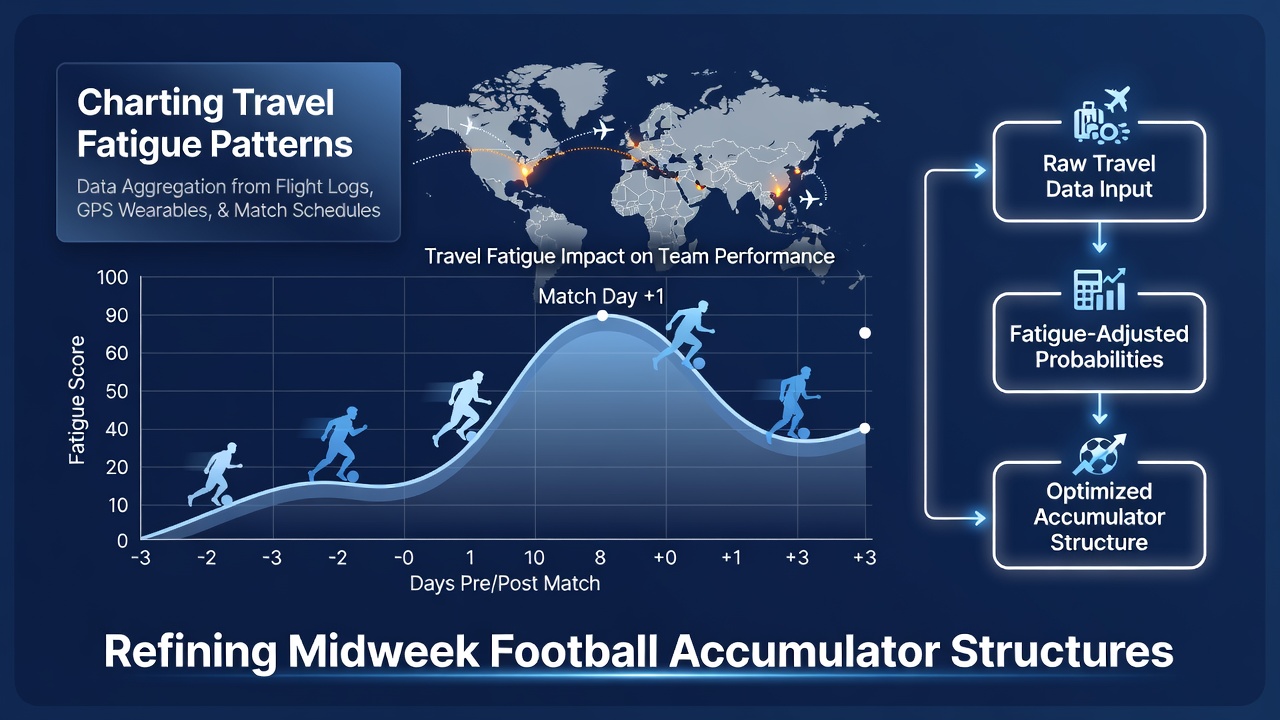
Travel fatigue emerges as a measurable factor in football performance data when teams cross multiple time zones or cover extensive distances between fixtures, and analysts have compiled datasets that track recovery timelines across various leagues. Researchers at institutions such as the University of Toronto have documented how sleep disruption and circadian rhythm shifts correlate with reduced sprint speeds and decision-making accuracy in players returning from continental competitions. These patterns become particularly relevant during midweek rounds when squads face compressed schedules that limit full physiological restoration.
Mapping Distance and Recovery Metrics
Performance tracking systems record average travel distances per player across a season, and figures from European club competitions show that journeys exceeding 1,000 kilometers often precede measurable dips in high-intensity running output. Data compiled by sports science groups in Australia indicate that teams logging more than four hours of flight time before a match exhibit a 12 percent reduction in total distance covered compared with home fixtures. Such statistics allow pattern recognition across multiple seasons, revealing clusters where away sides struggle to maintain pressing intensity after long-haul trips.
July 2026 schedules already list several midweek international qualifiers and club friendlies that require transcontinental movement, and analysts note how pre-season preparation windows influence later recovery baselines. Observers track variables including departure times, layover durations, and arrival-to-kickoff intervals to build predictive models for fixture outcomes. These models integrate GPS data from wearable devices alongside match statistics, producing layered indicators that highlight squads likely to underperform relative to historical benchmarks.
Time Zone Shifts and Physiological Markers
Studies conducted by the German Sport University Cologne have quantified how eastward travel disrupts melatonin cycles more severely than westward journeys of equivalent distance, leading to prolonged adjustment periods that extend into subsequent matches. Teams crossing two or more time zones before midweek games display elevated heart-rate variability during warm-ups, according to aggregated sensor readings from multiple clubs. Accumulator structures benefit when bettors incorporate these physiological markers alongside traditional form guides, because squads with shorter recovery windows show consistent underachievement in expected goal metrics.
Coaches implement targeted interventions such as adjusted training loads and light-exposure protocols, yet residual effects persist in match data. One dataset covering five European leagues found that sides returning from South American tours recorded a 9 percent drop in successful pass completion rates during the following domestic midweek round. Such granular observations enable construction of accumulator selections that favor teams with minimal travel exposure or those benefiting from extended rest periods between fixtures.
Integrating Fatigue Data into Accumulator Frameworks
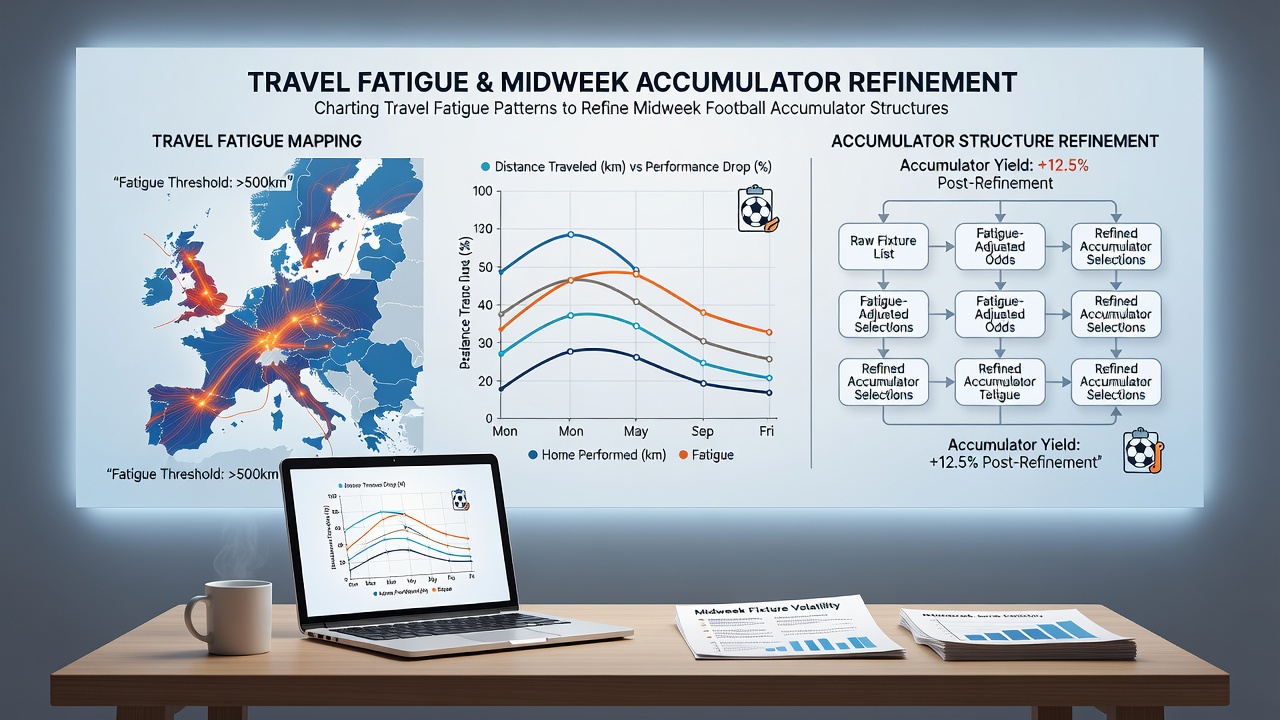
Accumulator builders combine travel-fatigue indices with statistical overlays such as expected goals differentials and set-piece conversion rates, creating layered filters that narrow selection pools. Canadian university research groups have published frameworks that assign weighted scores to travel variables, allowing systematic comparison across hundreds of fixtures. These scores adjust probability estimates downward for teams arriving within 48 hours of a long-haul flight, while elevating confidence intervals for sides playing at home after short domestic trips.
Historical match logs from July through December periods demonstrate recurring clusters where midweek results diverge from weekend trends precisely when travel fatigue aligns with fixture congestion. Pattern recognition software processes these logs to flag high-confidence segments for accumulator construction, focusing on matches where one side holds a clear recovery advantage. Industry reports from bodies such as the Asian Football Confederation further corroborate that regional travel patterns in Asian competitions mirror European findings, with similar performance decrements observed after cross-country flights.
Betting structures refined through this approach incorporate real-time schedule updates and weather data that might compound fatigue effects, such as high humidity during summer fixtures. Analysts cross-reference these elements with injury reports and squad rotation patterns released by clubs, producing multi-factor models that evolve as new data streams arrive. The resulting accumulator selections reflect cumulative evidence rather than isolated variables, increasing alignment with observed outcome distributions across large sample sizes.
Conclusion
Comprehensive charting of travel fatigue supplies an additional data dimension for refining midweek football accumulator structures, and ongoing collection of GPS, physiological, and performance metrics continues to sharpen these analytical tools. Organizations across multiple continents contribute comparable datasets that support cross-league comparisons, while scheduling authorities publish calendars that enable advance modeling of fatigue clusters. The integration of these elements yields frameworks grounded in measurable patterns rather than anecdotal observation.