Exploring Seasonal Variations in Draw Biases for Sprint Handicaps on Northern Racecourses
Jordan Klein · Aug 19, 2026
Exploring Seasonal Variations in Draw Biases for Sprint Handicaps on Northern Racecourses
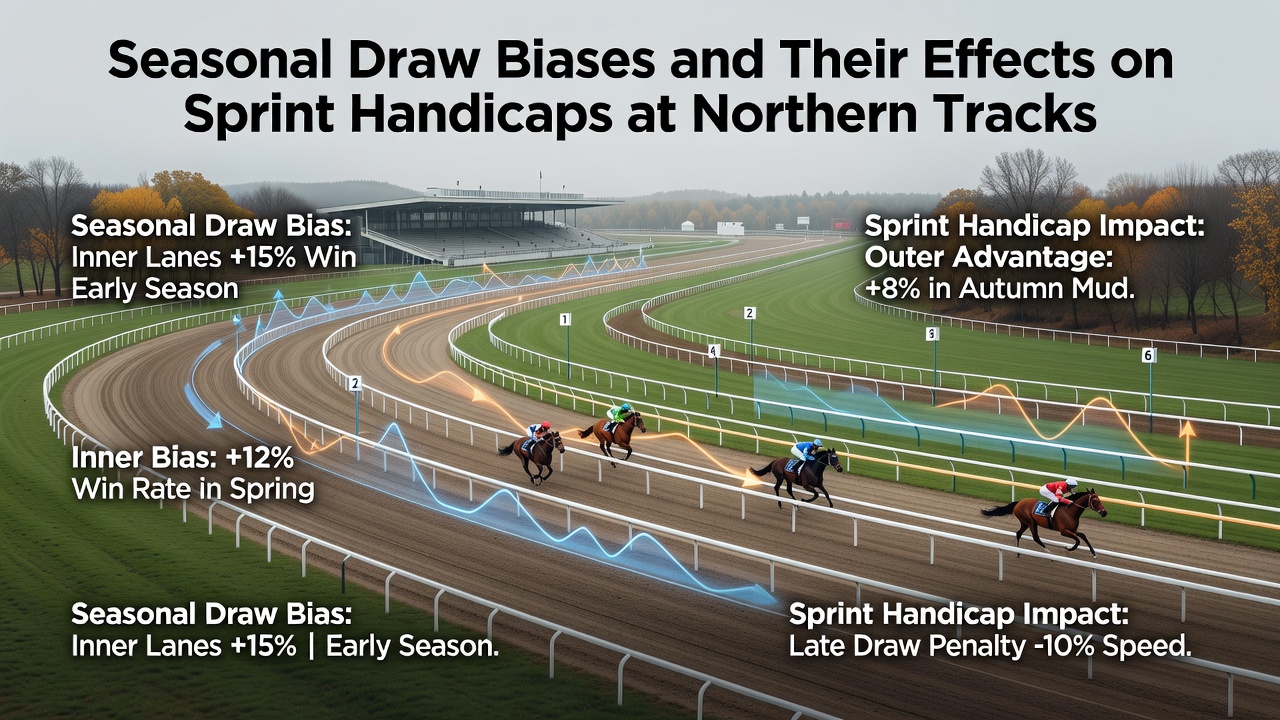
Draw biases in sprint handicaps shift noticeably across seasons at northern racecourses because weather patterns alter ground conditions while track configurations remain fixed, and researchers who track these patterns have compiled extensive records showing how low draws gain or lose ground depending on moisture levels and wind direction. Data collected over multiple years indicates that northern venues with pronounced camber and rail positions experience more pronounced changes during wetter months compared to drier periods, and this creates measurable advantages for certain starting stalls in five and six furlong contests.
Understanding Draw Position Mechanics at Northern Venues
Northern tracks often feature tighter turns and varying rail alignments that amplify stall advantages when the ground softens, whereas firmer surfaces tend to neutralize some of those edges and allow higher drawn runners to recover lost ground more effectively. Observers note that sprints on these courses reward early positioning near the rail during autumn and spring when rainfall increases, yet the same positions can become liabilities once summer dryness hardens the surface and favors those who can switch lanes without losing momentum. Studies from racing analysts have documented these shifts through sectional timing data that isolates how stall numbers correlate with finishing positions across hundreds of races.
Seasonal Ground Changes and Their Influence on Handicaps
Ground conditions evolve dramatically between January and December at northern circuits, and this progression directly modifies which draw positions deliver consistent returns in handicap events. During winter and early spring the bias often favors inside stalls because softer turf slows down those forced wide, while mid-summer firmness allows pace horses from wider stalls to maintain speed into the straight without the drag experienced on heavier ground. Handicappers adjust official ratings accordingly, yet the underlying positional edge persists until the next weather cycle resets the surface dynamics, and those adjustments create windows where well-drawn runners offer value before market prices fully reflect the updated conditions.
August 2026 brought extended dry spells to several northern circuits, and timing records from that period revealed how the established low-draw advantage narrowed considerably compared to the same fixtures in previous wetter years. Racecourse officials reported firmer going that allowed jockeys to maneuver from midfield stalls without expending extra energy, and this produced a temporary flattening of the bias curve in sprint handicaps until rainfall returned in September.

Impact on Handicapping Strategies and Stall Selection
Trainers and jockeys who study seasonal draw patterns adjust their approaches by targeting races where the current ground state aligns with known stall strengths, and this tactical awareness appears in the way certain stables repeatedly secure favorable positions in specific months. Handicaps amplify these effects because the weight carried by each runner interacts with the energy cost of running wide, creating situations where a horse drawn favorably on soft ground carries less effective burden than an identical rival forced to cover extra distance. Statistical models built from past performances demonstrate that ignoring seasonal bias shifts leads to mispriced runners, while those incorporating ground-specific draw data achieve better alignment between expected and actual outcomes.
Regional Comparisons and Supporting Evidence
Comparative analysis with southern and western circuits shows that northern tracks exhibit more volatile seasonal bias swings because of their exposure to Atlantic weather systems, and this volatility produces clearer patterns for analysts to measure. A report published by the Racing Association of South Africa examined similar ground-related draw variations on coastal tracks and found parallels in how moisture alters stall profitability, while European studies from university research groups have corroborated that rail position and camber interact with seasonal rainfall to reshape sprint outcomes. These cross-regional findings reinforce the principle that draw bias remains dynamic rather than static, and northern handicap results reflect that dynamism most visibly during transition months when conditions change rapidly.
Conclusion
Seasonal draw biases at northern tracks continue to shape sprint handicap results through their interaction with ground conditions and track geometry, and the patterns documented across years provide a factual framework for understanding positional advantages. As weather cycles repeat, the data collected from timing and finishing positions offers ongoing insight into how stall numbers translate into performance edges under different surface states.