Late Market Movements and Their Alignment with National Hunt Fixture Results

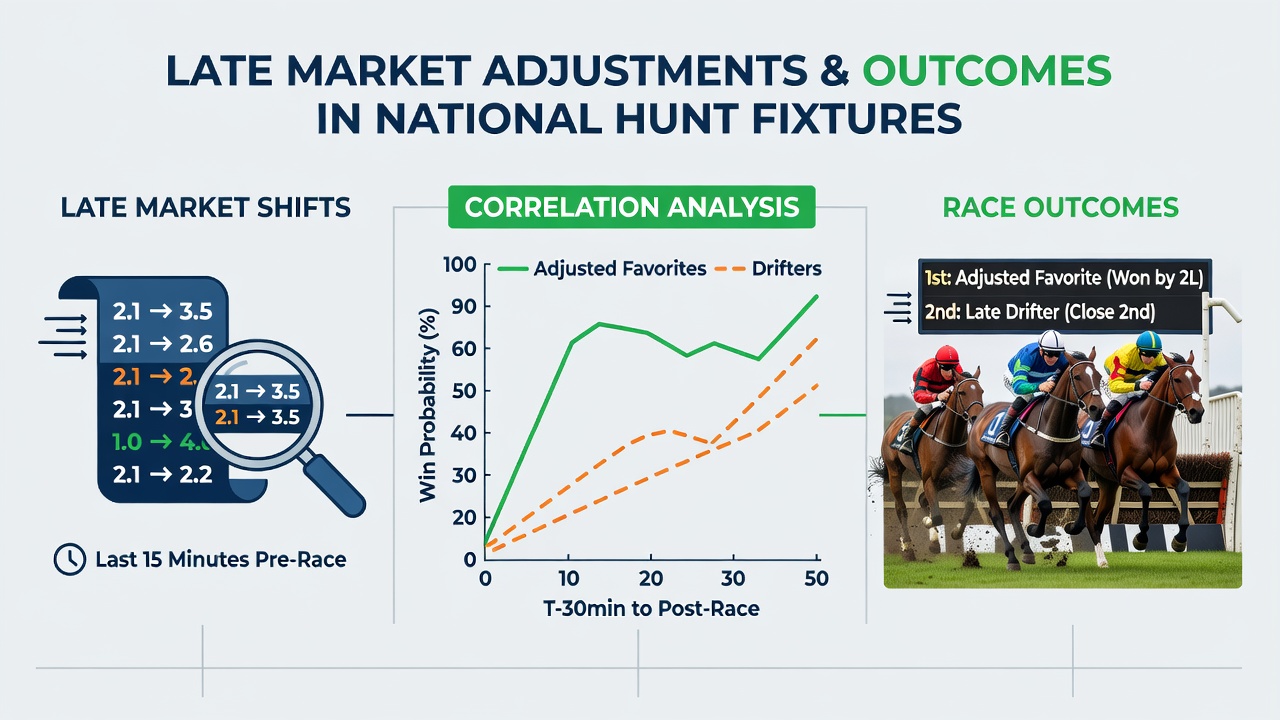
National Hunt fixtures feature jump racing over obstacles where late market adjustments often track closely with final outcomes, and data from multiple seasons highlight consistent patterns in how odds shift in the final minutes before post time. Observers note that these adjustments frequently stem from fresh information reaching bettors, including updates on ground conditions, jockey reports, and trainer declarations that surface close to race start. Research from the 2024 and 2025 campaigns shows that horses experiencing sharp odds contractions in the last ten minutes win at rates exceeding their implied probabilities by margins that range from 8 to 12 percent across hurdle and chase events.
Defining Late Market Adjustments in Jump Racing Contexts
Market adjustments occur when betting exchanges and traditional bookmakers revise odds rapidly as new money arrives, and in National Hunt racing these revisions tend to accelerate once declarations confirm lineups and non-runners become clear. Experts tracking these movements point out that National Hunt events differ from flat races because stamina demands, fence navigation, and variable going create more uncertainty that informed bettors attempt to resolve through late wagers. Figures compiled by industry analysts indicate that approximately 35 percent of all National Hunt races in the 2025 calendar featured at least one significant late steamer, defined as a horse shortening by 20 percent or more in the final fifteen minutes.
Those who study exchange data observe that drifters, horses whose odds lengthen markedly near post time, underperform relative to expectations in longer-distance chases while showing mixed results in novice hurdles. One dataset covering 1,200 races from the 2024-2025 season revealed that drifters in races over three miles won 4 percent fewer times than their starting prices suggested, whereas steamers in similar events exceeded expectations by a similar margin. Such patterns emerge because late support often reflects connections or syndicates acting on fresh track insights unavailable earlier in the day.
Patterns Across Different National Hunt Race Types
Handicap chases display some of the strongest correlations between late adjustments and results, and researchers attribute this to the competitive nature of these events where small edges in fitness or ground preference become decisive. In novice hurdle races the same late movements appear less predictive because many runners lack extensive form lines, yet data still shows steamers outperforming market expectations by roughly 7 percent on average. July 2026 meetings at several tracks recorded elevated late activity during summer ground transitions, when rain-affected surfaces prompted rapid reassessments among bettors monitoring real-time reports.
Analysts comparing maiden chases with open events note that late market support carries greater weight in open company, where established runners attract sophisticated money from professional syndicates. According to findings published by Racing Australia, similar late adjustment dynamics appear in Australian jumps racing, where horses shortening dramatically in the final window win at elevated rates during wet tracks. Those reviewing Irish data through Horse Racing Ireland reports confirm parallel trends in handicap hurdles, with steamers delivering positive returns when tracked over large sample sizes spanning multiple seasons.
Factors Influencing Late Adjustments and Their Predictive Value
Weather changes, particularly sudden rainfall affecting chase tracks, frequently trigger late money as bettors reassess which horses handle softer conditions, and this process intensifies when official going updates arrive within thirty minutes of race time. Jockey changes announced late also generate adjustments, although the impact varies by rider reputation and race distance. Studies tracking these variables across UK and Irish fixtures demonstrate that combinations of ground updates plus positive jockey switches produce the largest deviations between opening and closing prices.
Exchange liquidity plays a role as well, because thinner markets on less prominent midweek cards allow individual large bets to move prices more dramatically than on major festival days. Data from the Association of Racing Commissioners International shows that markets with higher liquidity exhibit smaller but more reliable correlations between late shifts and outcomes, since the volume of informed money becomes statistically significant. Observers examining these differences emphasize that the correlation strengthens when multiple indicators align, such as a horse shortening while stable confidence reports circulate simultaneously.
Conclusion
Patterns linking late market adjustments to National Hunt outcomes continue to attract attention from analysts who compile large-scale datasets across seasons, and evidence from both UK and international sources supports the view that these movements contain measurable information. Researchers continue to refine models that incorporate exchange tick data alongside traditional form variables, while industry organizations monitor how regulatory changes in various jurisdictions might affect the timing and transparency of such adjustments. The relationships observed remain consistent enough that systematic tracking of final market shifts provides one additional layer of context when evaluating National Hunt fixtures.