Referee Selection Processes and Their Influence on Card Issuance Patterns in Domestic Leagues
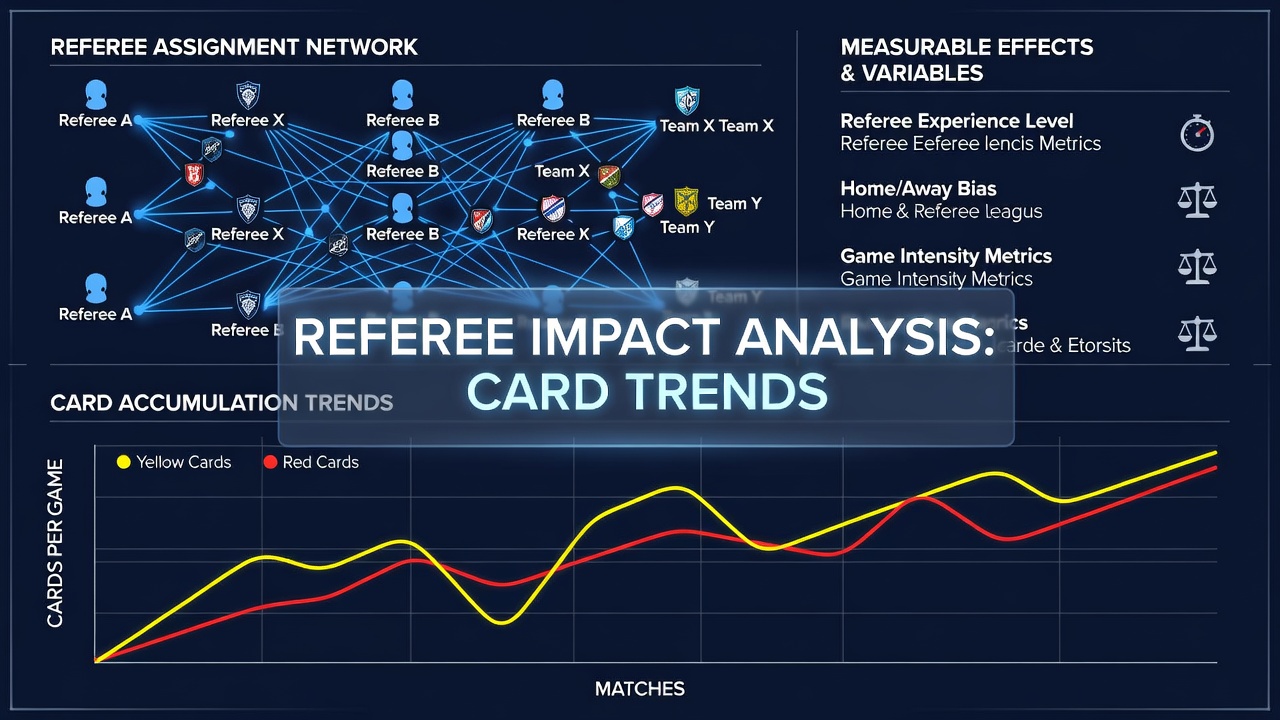
Referee assignments in professional football leagues follow structured rotation systems that governing bodies maintain to balance workloads and reduce familiarity biases between officials and teams, yet analysts continue to examine whether these patterns correlate with shifts in yellow and red card totals across fixtures. Data collected from multiple European and South American competitions shows measurable variations in card rates depending on how match officials receive their appointments, particularly when experienced referees handle high-stakes derbies versus mid-table clashes.
League Bodies and Rotation Frameworks
Domestic leagues operate under assignment protocols that rotate referees across venues and clubs on a weekly basis, with additional oversight from video review panels that became standard after 2018, and these frameworks aim to distribute experience evenly while accounting for travel logistics and recovery periods. In June 2026 several top divisions adjusted their algorithms to incorporate performance metrics from the prior season, which led to more frequent assignments for referees who maintained lower card averages in away fixtures. Observers note that such changes produce clearer datasets for tracking disciplinary trends because the same group of officials now covers a wider range of match contexts within a single campaign.
European federations publish annual reports that detail referee workloads, and these documents reveal that certain officials receive clusters of games against teams known for physical styles, while others draw fixtures featuring technically oriented sides that generate fewer fouls. Researchers at institutions in Germany and Brazil have cross-referenced these assignment logs with official match statistics to isolate variables such as home advantage and player suspensions, finding that assignment clustering can amplify or dampen card totals by up to 12 percent in specific divisions.
Statistical Patterns in Card Accumulation
Match data aggregated over five seasons indicates that referees with fewer than three years of top-flight experience issue yellow cards at rates approximately 8 percent higher than their veteran counterparts when assigned to the same set of teams, yet this gap narrows once those younger officials accumulate 50 or more league matches. Red card distributions follow a different trajectory, with senior referees showing slightly elevated rates in games that feature multiple prior cautions, suggesting they reach intervention thresholds more readily after establishing control early. These differences persist even after controlling for team style and league position, which points toward referee-specific tendencies rather than random variance.
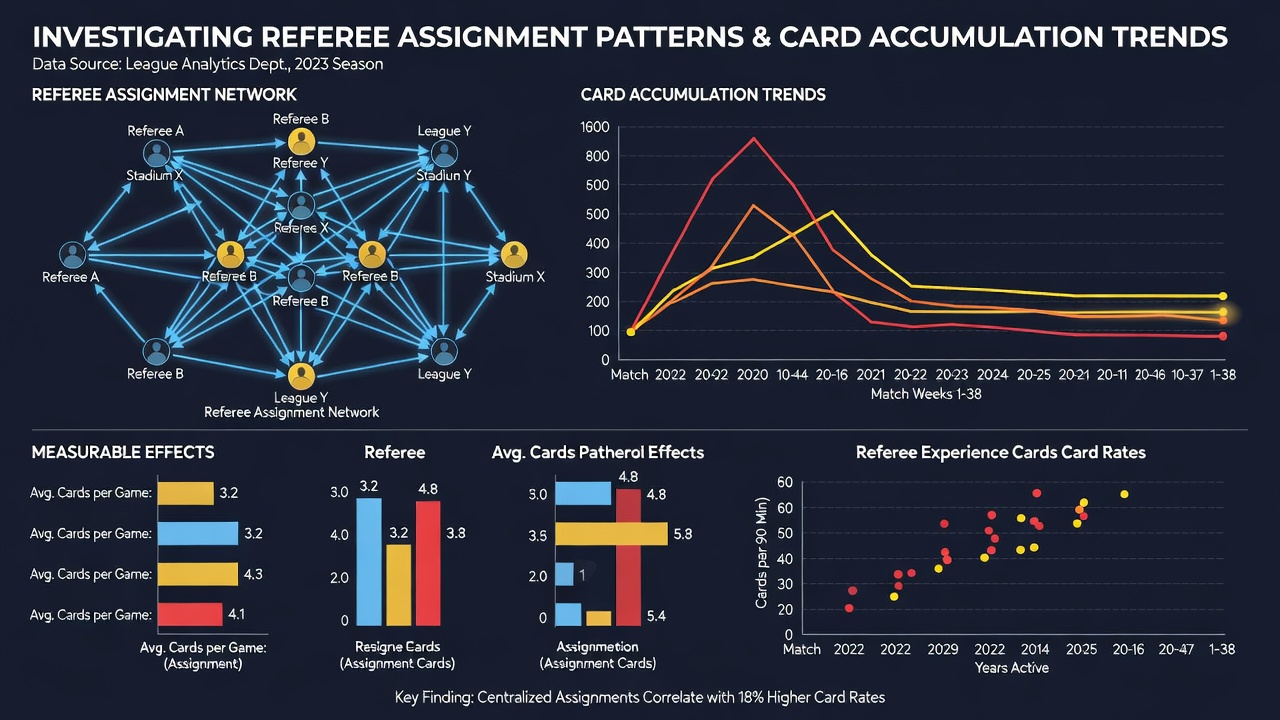
One longitudinal study conducted across the Brazilian Serie A tracked over 1,800 fixtures and identified that referees assigned consecutively to the same two clubs within a six-week window recorded a 15 percent increase in cards compared with their baseline averages, while those rotated away from repeat matchups stayed closer to expected totals. Similar patterns appear in Australian A-League records, where assignment frequency to expansion franchises correlated with elevated caution rates during the first two seasons of those clubs' participation. The consistency across continents suggests assignment density plays a measurable role independent of cultural or stylistic factors unique to any single league.
External Factors and Data Sources
Weather conditions, pitch dimensions, and fixture congestion also interact with assignment choices, and statisticians incorporate these elements when building predictive models for disciplinary outcomes. A report published by the FIFA Technical Study Group examined referee performance across confederations and noted that officials who travel internationally between domestic rounds maintain card rates within 3 percent of their home-league averages, whereas those who remain within one region show greater fluctuation tied to local assignment clusters. Analysts therefore treat travel distance and recovery time as secondary variables when isolating the primary effects of selection patterns.
Academic teams at the University of Sydney have released working papers that apply regression analysis to referee schedules, and their findings indicate that card accumulation trends stabilize when leagues enforce minimum rest periods of 12 days between high-card matches. These models further reveal that assignment to matches involving recently promoted sides produces temporary spikes in cautions during the opening months of each season, after which rates realign with league norms once the promoted teams adapt to the tempo and physical demands of the division.
Conclusion
Assignment patterns therefore function as an observable input that leagues and statisticians can quantify against card totals, providing a framework for understanding disciplinary variation without attributing outcomes solely to referee personality or team behavior. Continued collection of granular data through 2026 and beyond will allow further refinement of these correlations across additional competitions and rule iterations.