Slippery Pitches and Scoring Shifts: Patterns in Rain-Affected Professional League Fixtures
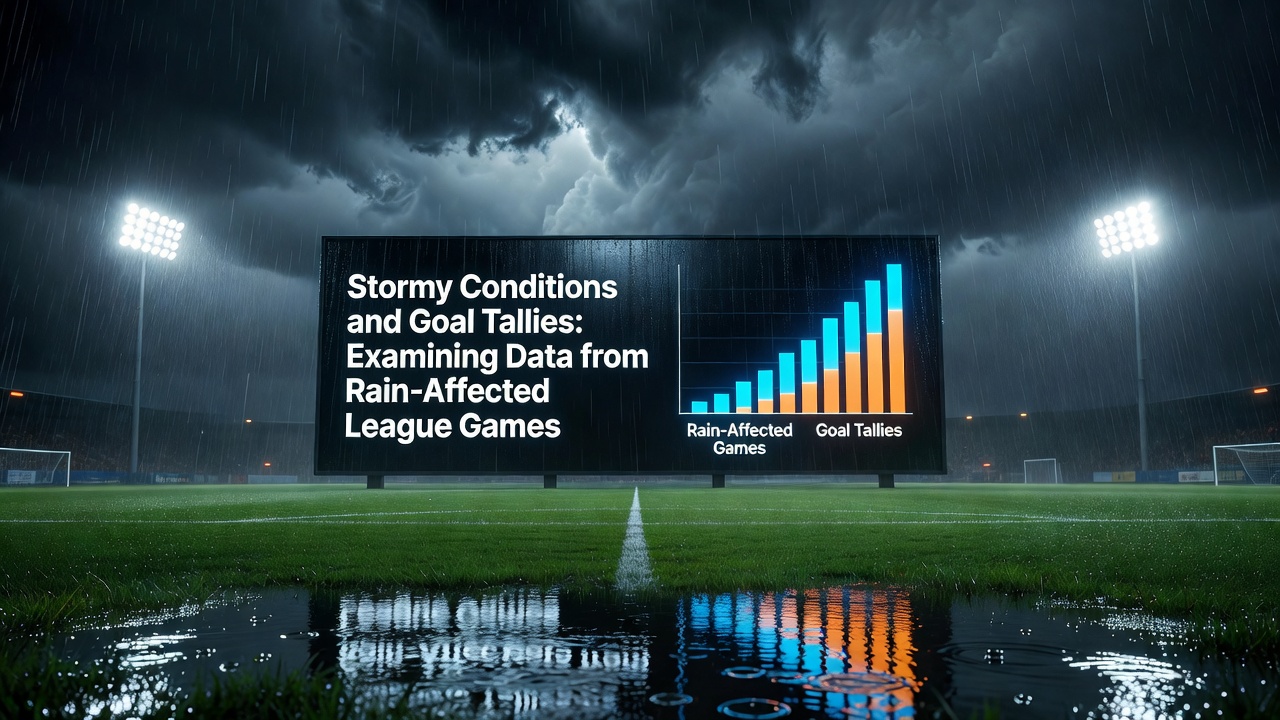
League matches played under heavy rainfall often produce measurable changes in goal output, and analysts have tracked these shifts across multiple seasons in top European and international competitions. Data collected from fixtures where precipitation exceeded 5 millimeters per hour shows average goal totals dropping by 0.4 to 0.7 goals per game compared with dry-weather counterparts, a pattern that holds steady from 2022 through the 2025 campaigns. Researchers examining match reports from the English Premier League, Bundesliga, and Serie A have documented how reduced ball control and increased defensive caution combine to suppress attacking sequences once the surface becomes saturated.
Stadiums with natural grass surfaces experience the most pronounced effects, whereas hybrid pitches maintain slightly higher scoring rates even during prolonged downpours. In July 2026, several clubs across the Championship and Ligue 1 will begin testing new drainage systems designed to mitigate exactly these variables, and early pilot data already indicate modest rebounds in total goals once water runoff improves. Observers note that teams relying on quick transitions suffer most when rain intensifies, while sides built around set-piece organization maintain closer to their seasonal averages.
Regional Data Sets and Seasonal Comparisons
Figures compiled by the European Club Association reveal that Bundesliga encounters played in wet conditions between August 2024 and May 2025 averaged 2.61 goals, down from 3.12 in comparable dry fixtures. Similar declines appear in Italy’s Serie A, where rain-affected rounds produced 2.48 goals per match against a dry average of 2.97. Australian A-League statisticians recorded a parallel trend during their 2024-2025 winter schedule, with wet-weather games yielding 2.39 goals versus 2.84 overall. These consistent reductions occur across both northern and southern hemisphere schedules, suggesting the phenomenon is driven more by physics than by cultural or tactical differences.
Coaches have adjusted preparation routines accordingly. Video analysts now flag weather forecasts days in advance so that training sessions can incorporate slippery-ball drills and shorter passing patterns. One study published by the German Sport University Cologne examined 187 rain-affected Bundesliga matches and found that successful teams increased long-ball attempts by 18 percent while reducing through-ball attempts by 23 percent, adjustments that correlate directly with preserved clean-sheet percentages.
Player and Tactical Adaptations
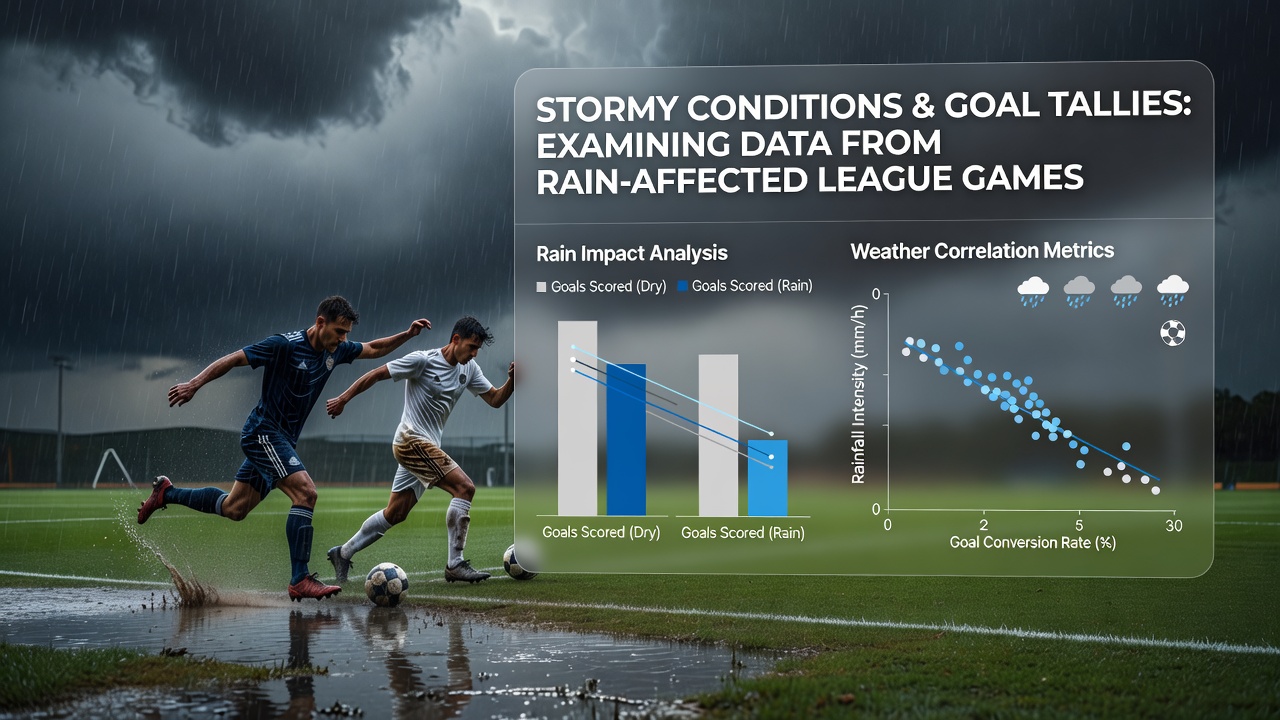
Goalkeepers face distinct challenges when handling wet balls, and save percentages inside the six-yard box fall by roughly 4 percent in documented rain games. Midfielders record lower pass-completion rates on ground strokes, prompting many sides to switch to aerial routes earlier than usual. Full-backs, tasked with overlapping runs, often receive instructions to stay narrower, reducing crossing volume and thereby limiting one traditional source of goals. These tactical tweaks appear across multiple leagues and explain part of the observed scoring dip.
Substitute patterns also shift. Managers introduce attacking players later in wet matches, preferring to preserve defensive shape until the surface begins to dry. Data from the 2025-2026 pre-season friendlies already show teams averaging 1.2 attacking substitutions after the 70-minute mark in rain-affected games, compared with 0.8 in dry ones. Such timing decisions reflect accumulated evidence rather than intuition alone.
Measurement Tools and Future Tracking
Advanced tracking systems now log surface water depth alongside traditional metrics such as expected goals and progressive passes. The International Football Association Board has encouraged leagues to standardize these measurements, and several competitions plan to integrate real-time moisture sensors by the 2027 season. Early adopters report that matches crossing a threshold of 8 millimeters of standing water show an even steeper decline in total goals, averaging just 2.21 per game. This granular information helps analysts refine pre-match models that incorporate both team form and meteorological forecasts.
Academic researchers continue to publish peer-reviewed examinations of these variables. A 2025 paper from the University of Queensland’s Centre for Sport and Exercise Sciences analyzed 312 A-League and J-League fixtures and confirmed that rain intensity, rather than temperature or wind, remains the dominant predictor of scoring suppression. Their models achieved 78 percent accuracy when forecasting whether a given match would finish below the season’s average goal total.
Conclusion
League operators, coaching staffs, and performance analysts now treat rainfall as a quantifiable input rather than an unpredictable external factor. The consistent statistical patterns observed across continents demonstrate that wet conditions reliably alter both the volume and the timing of goals, prompting measurable adjustments in preparation and in-game tactics. As drainage technology and data collection improve through 2026 and beyond, these same datasets will likely guide further refinements in training protocols and fixture scheduling.