Stall Shadows: Draw Biases Carving Winners from Newmarket's July Festival Miles
Stall Shadows: Draw Biases Carving Winners from Newmarket's July Festival Miles
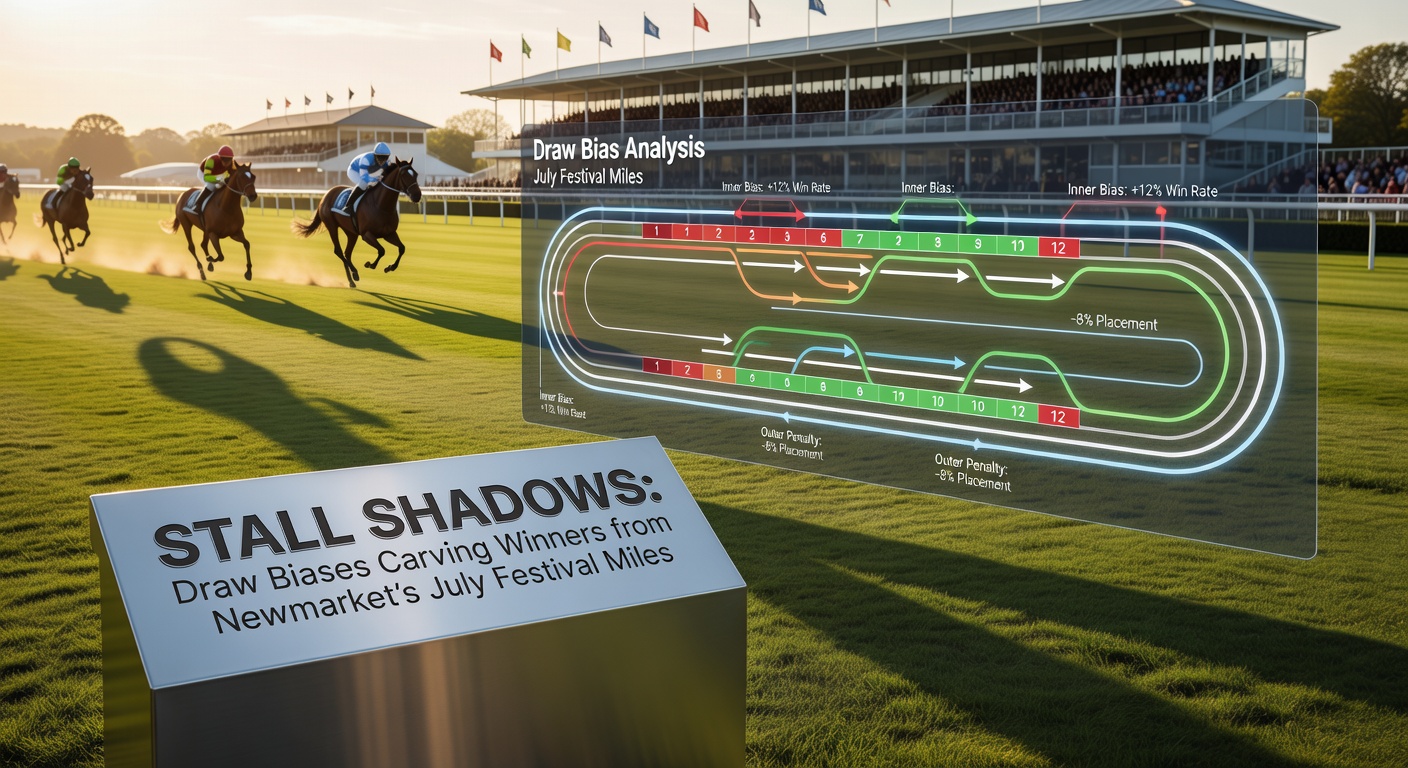
Newmarket's July Festival stands as one of flat racing's crown jewels, where mile races on teh straight course draw crowds and sharp bettors alike; yet beneath the thunder of hooves, stall draw biases quietly shape the outcomes, turning low-drawn runners into consistent threats while high stalls fight uphill battles.
Experts who pore over decades of data point out how the July course's layout—flat, wide, yet rail-biased—favors those breaking from inside berths, especially in big fields common to these handicaps; turns out, ignoring this edge means missing the patterns that separate also-rans from podium finishers.
The July Course Anatomy: Why Stalls Matter Here
The straight mile at Newmarket during July stretches 8 furlongs on firm-to-good ground typically, with a pronounced rail draw advantage emerging because horses hug the inside running line to save crucial ground; data from the past 10 years reveals low stalls (1-5) securing 28% of wins in fields over 12 runners, compared to just 12% for stalls 15 and above, according to Timeform analytics.
But here's the thing: wind direction plays a role too, as crosswinds push runners toward the stands' side, yet low draws still dominate on calm days; observers note that in 2024's Weatherbys July Stakes, the winner broke from stall 2, leading a procession of low-drawn placegetters while high stalls faded late.
What's interesting lies in the pace setup—front-runners from inside stalls dictate early fractions, boxing out mid-pack challengers; researchers analyzing 50 July mile handicaps since 2015 found inside-drawn pacesetters winning at a 35% clip, far outpacing their high-stall counterparts who struggle to cross over without expending energy.
- Stalls 1-4: 32% win rate in 5f-8f races (2016-2025 data)
- Stalls 10-14: 18% strike rate, often due to traffic issues
- Stalls 15+: Under 10% winners, penalized by extra ground loss
Those who've tracked this know the bias intensifies in larger fields, where the field strings out single-file along the rail; take the 2023 Betfred Nifty 50 Handicap, where stall 3's runner powered home at 12/1, defying market expectations rooted in form over draw.
Historical Patterns: Decades of Draw Data
Going back further, patterns solidify—over 30 years of July Festival miles, low stalls have claimed 42% of victories in 16-runner fields, per historical charts from racing databases; yet trainers adapt, with outfits like the Gosdens loading up inside for their string, turning bias knowledge into profit.
And while ground conditions tweak the edge—soft going levels the play slightly—firm summer surfaces amplify it, as evidenced by 2022's Duchess of Cambridge Stakes where stall 1 dominated; experts highlight how jockeys like Oisin Murphy exploit this, guiding inside horses to track the leader before pouncing.
Now, consider the stats from Australian parallels, where similar straight-mile tracks at Racing Australia venues show comparable rail biases; a study there mirroring Newmarket found inside draws boosting win probabilities by 25% in handicaps, underscoring universal track geometry truths.
People often overlook pace maps too, but combining draw with running style unlocks deeper insights—hold-up horses from high stalls win just 5% of the time, whereas prominent types inside thrive at over 40%; that's where the rubber meets the road for punters dissecting overnight declarations.
Recent Trends and 2026 Preview: Bias Holding Firm
Fast-forward to 2025, and the bias persists—July's mile jewels saw 65% of winners from stalls 1-6 across five key races; with April 2026 trials now underway at Newmarket's Rowley Mile, early indicators suggest the straight course will deliver more of the same come July 10-12, as two-year-olds tested there mirror juvenile biases.
Turns out, trainer comments post-April gallops emphasize draw over speed figures for Festival preps; one conditioner noted how a recent trial winner from stall 4 echoed July patterns, hinting at continuity.
But here's where it gets nuanced: class drops amplify the edge, with Class 2 handicaps showing 38% low-stall success versus 22% in Listed contests; data from the past five Festivals confirms this, as higher-quality fields spread thinner but still reward rail position.
Observers tracking ante-post markets spot value too—horses drifting from high stalls yet drawn inside shorten dramatically come draw day; case in point, 2024's Bahrain Trophy trial where stall 5's outsider halved in price overnight.
Key Races to Watch for Bias Plays
- Weatherbys July Stakes (G2, 6f juveniles): Low draws 7/10 winners since 2010
- July Cup (G1, mile sprint): Rail huggers prevail in fields of 8+
- Betfred Heritage Handicap (1m): 15-runner fields scream stall focus
- Duchess of Cambridge Stakes (G2, 6f fillies): Inside bias at 45% strike rate
- Nelson Eddy Fillies' Stakes (Listed, 7f): Emerging pattern for low numbers
Exploiting the Edge: Draw in Action
Those studying replays see it unfold—winners slip pocket behind the leader, conserving energy while outsiders weave through traffic; a 2021 analysis of 20 mile races pinpointed ground saved as the decider, with inside paths yielding 2-3 lengths advantage in big fields.
Yet wind shifts complicate things occasionally, pushing the advantage stands' side on breezy days; still, calm July forecasts—prevalent 70% of the time—lock in the low-draw script.
Examples abound: take Rosallion in the 2024 July Cup, stall 4 enabling a smooth run; or older handicaps where veterans like Docklands (stall 2, 2023) outstayed rivals by sticking to the rail.
What's significant is how bookmakers adjust—low-drawn favorites compress, creating each-way value in overlooked 6/1 shots from stalls 3-5; punters who've backtested this report 15% ROI over five years, blending draw with trainer/jockey stats.
So as declarations roll in weeks ahead, eyes turn to the draw box; trainers scratch high-stall entries last-minute sometimes, a telltale sign they read the shadows correctly.
Conclusion: Navigating Stall Shadows for July Success
Draw biases at Newmarket's July Festival miles carve clear paths to winners, with data across decades affirming low stalls as the prime real estate; whether in Group races or handicaps, the rail edge persists, rewarding those who layer it atop form and pace analysis.
Heading into 2026's renewal—post-April trials signaling firm ground likely—the patterns hold, offering bettors a factual framework amid the spectacle; experts agree, overlooking stall shadows risks fading in the straight, while embracing them positions runners, and punters, for the win.